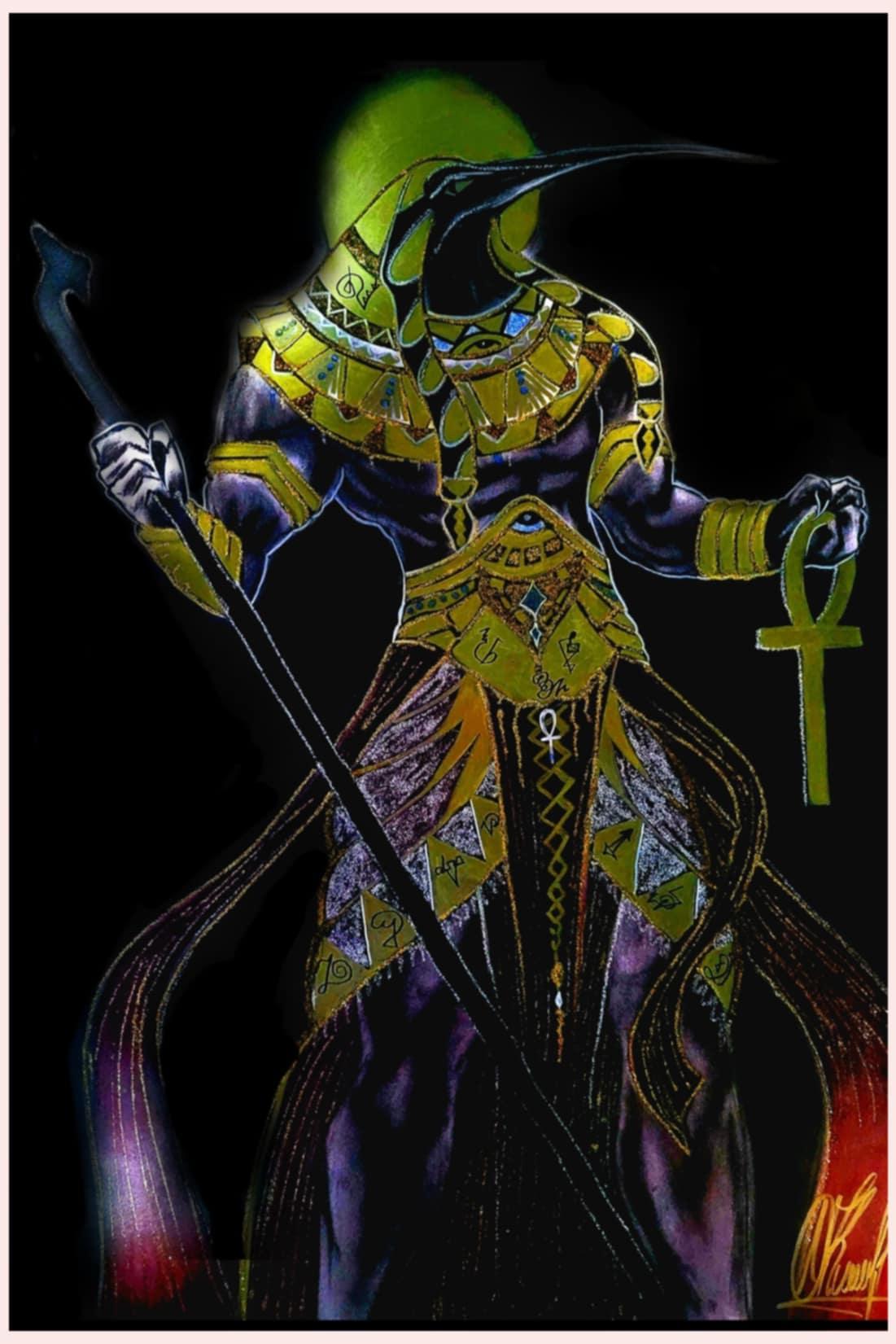
Thoth
The figure depicted is Thoth, a major deity in the Egyptian pantheon. Key Visual Characteristics Ibis Head: Thoth is most commonly depicted with the head of an ibis (or sometimes as a baboon), which is clearly visible here with the distinctive long beak. Scepter/Staff: The figure holds a staff or scepter in the left hand, often associated with authority. Ankh: In the right hand, the figure holds an Ankh, the ancient Egyptian symbol of life. Regal and Ornate Dress: The deity is adorned in richly detailed and ornate armor or vestments, primarily in gold and dark/black tones, giving it a powerful, magical, or otherworldly appearance. The clothing features intricate patterns, including geometric designs and hieroglyphic elements. Symbols: Notice the Eye of Horus (Wedjat) symbol prominently displayed on the belt/kilt area, another powerful symbol of protection and royal power. There are also other symbols resembling ankhs and possible Uraeus imagery. Color Palette: The use of deep black, vivid gold, and an ethereal green/lime glow around the head and shoulders creates a dramatic and mystic atmosphere, suggesting a being of immense power and knowledge emerging from darkness. About Thoth Thoth was the god of writing, magic, wisdom, the moon, and knowledge. He was believed to be the inventor of writing (hieroglyphs) and the scribe of the gods. He played a crucial role in the judgment of the dead, recording the verdict during the Weighing of the Heart ceremony. This specific artwork seems to be a modern, highly stylized, and dramatic interpretation of the classic Egyptian deity.